

Online Store
Commentary on Singapore in 3 volumes Bundled
ISBN/SKU: #9789811299766
Publisher: World Scientific Publishing
General
QUANTITY
$ 80.66$ 76.70
In Stock
PRODUCT DESCRIPTION
Commentary on Singapore
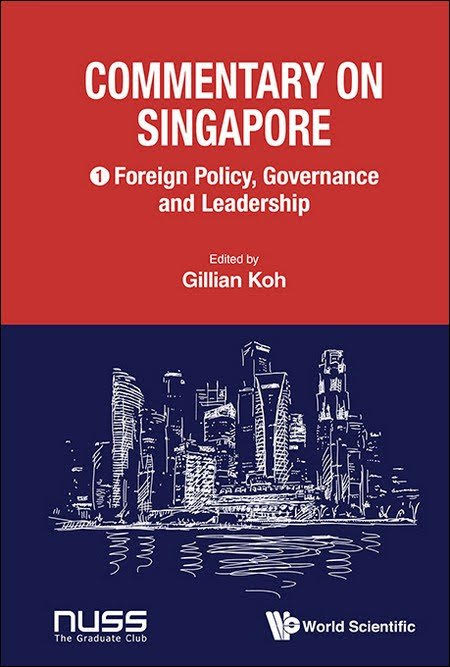
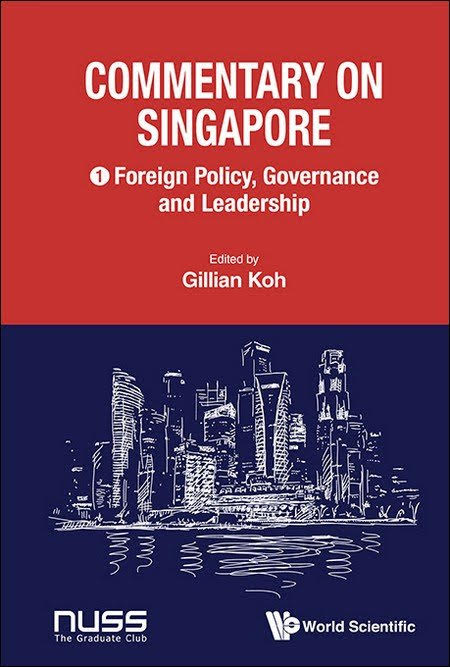
Volume 1: Foreign Policy, Governance and Leadership
Edited by: Gillian Koh (National University of Singapore Society, Singapore)
ISBN: 978-981-12-6559-4 (pbk)/Price: SGD 32 before GST
Thought-leaders contributing to this volume include Tommy Koh, Tan Tai Yong, Kishore Mahbubani, Bilahari Kausikan, Han Fook Kwang, and more!
This volume comprises essays by Singapore thought-leaders republished from various issues of Commentary, the annual journal of the National University of Singapore Society.
In the first section, chapters have been curated to provide historical context and analyses of Singapore's foreign policy. The second section presents views on the orientation, values and interests the new, fourth generation of national leaders might have to adopt as they address the emerging challenges in this policy domain so critical to the city-state's survival.
These highly accessible essays provide the general reader valuable grounding and frameworks for thinking about Singapore's approach in navigating the geopolitical shifts in its Asian neighbourhood.
Contents: Singapore's Foreign Policy: Unique Features (Tommy Koh); 50 Years of Singapore's Securitisation: Prospects and Challenges (Bilveer Singh); 50 Years of Singapore's Connections with Europe (Yeo Lay Hwee); Singapore and Southeast Asia: A Shared History and a Shared Destiny (Tan Tai Yong and Soh Yi Da); Singapore's Foreign Policy: A Pioneer Diplomat's Reflections (Tommy Koh); Singapore–China Relations: 2017–2027 (Lee Huay Leng); Singapore's Relations with the United States of America (Daniel Chua); Singapore and the ASEAN Secretariat: A Marriage Made in Heaven (Kishore Mahbubani); Singapore's Foreign Relations with Malaysia (K Kesavapany); When Relationships Change: Singapore–Indonesia Ties after Suharto and the Importance of Growing Together (Leonard C Sebastian); Singapore's Excellent Relations with Post-War Japan: A Convergence of Interests and Values (Lam Peng Er); Singapore–India: An Enduring Relationship (Gopinath Pillai); Singapore–Australia Relations: The Role of Historical Ties, Personalities, Values and Interests (Eddie Teo); Singapore's Relations with Europe (Tan York Chor); Thinking about Russia: A Personal Perspective (Bilahari Kausikan); Singapore and the United Nations (Vanu Gopala Menon); Connecting and Collaborating to Change the World: Diplomacy in the Palms of Citizens (Jean Tan); Singapore and the Preponderance of Power (Khong Yuen Foong); The 4G Question: Whither Exceptional Singapore (Han Fook Kwang); A Thoughtfully Pragmatic Singapore (Kenneth Paul Tan); Singapore: Asia's Diplomatic Hub (Parag Khanna); Singapore's 4G Leaders' China Challenge (Peh Shing Huei); Identity in Singapore Version 4.0 (Lydia Lim); A Democracy of Words (Johannis Auri Bin Abdul Aziz);
Readership: Students, academics, policy makers, corporate sector officials and civil society activists, and general readers interested in Singapore.
Thought-leaders contributing to this volume include Piyush Gupta, Laurence Liew, Lee Tzu Yang, Geh Min, and more!
This volume comprises essays by Singapore thought-leaders republished from various issues of the annual journal of the National University of Singapore Society called Commentary.
The chapters have been curated to provide historical review of Singapore's journey in economic, ecological and social development. Centred around the theme of sustainability, together, they provide a rich account of how the issues of environmental management and human resource development were pursued in tandem with strategic industrial policy from the early days of independence.
They also convey how the current plans to take the country into the age of the Industrial Revolution 4.0 of digitisation and artificial intelligence, to continue to be the hub of hubs in the new economy, cannot and must not be at the expense of ecological health and a strong sense of stakeholdership among Singaporeans. The issues about immigration in the face of demographic decline, the choices in the sources of energy to power the economy in a carbon-constrained world, and the competition that a small state must continue to respond to as new growth sectors reshape the global economy are tackled by the eminent thought-leaders who contributed the chapters.
While this is not new material, the reader will be surprised by how the debates about the policy choices and the expressions regarding what is important for Singapore and Singaporeans to achieve true and enduring national wealth remain fresh in this highly accessible edited book.
Contents: Singapore's Economic Development, 1965–2020: Review, Reflection and Perspective (Tan Khee Giap, Evan Tan Beng Kai and Vincent Kwan Wen Seng); Economic and Business Development in Singapore and the World: A Small Economy Perspective (David Skilling); Development of Singapore's Financial Sector (Piyush Gupta); SGP 4.0 — Singapore in the Artificial Intelligence Era (Laurence Liew); Singapore and ASEAN: Working in Tandem to Leverage Industrial Revolution 4.0 (Sanchita Basu Das); Singapore's Interest in LNG and Becoming a Regional Gas Hub (Lee Tzu Yang); Singapore's City in Nature: More than 50 Years of Greening (Kenneth Er and Leong Chee Chiew); 500 Shades of Green (Geh Min); Singapore Challenged: The Natural and Living Environment (Euston Quah and Christabelle Soh); Iron Trees and Cheap Water: Environmental Identities in Singapore (Leong Ching); Reflections on Singapore's Demographic Future (Paul Cheung); Building an Enabling Environment for Successful Ageing (Susana Concordo Harding); A Sustainable Future through Purposeful Making (Veerappan Swaminathan);
Readership: Students, academics, policy makers, corporate sector officials and civil society activists, and general public interested in Singapore.
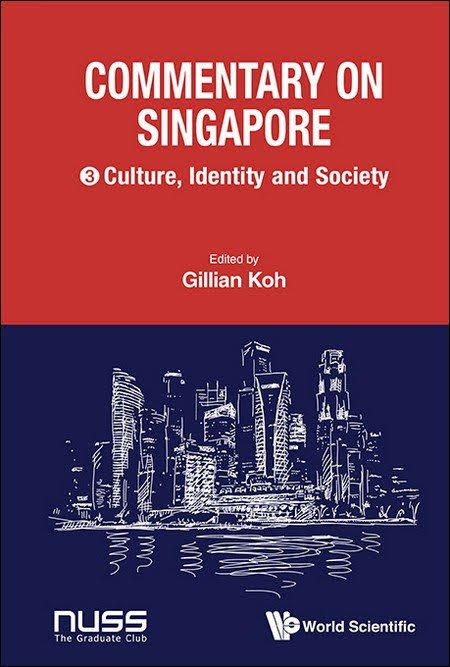
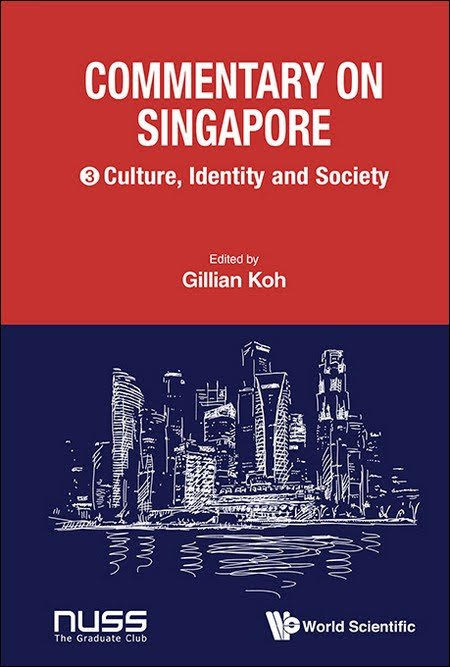
Thought-leaders contributing to this volume include Alvin Tan, Kwa Chong Guan, Yang Razali Kassim, Kishore Mahbubani, Gerard Ee, and more!
This volume comprises essays republished from various issues of the annual journal of the National University of Singapore Society called Commentary.
The third in a series that provides bite-sized reviews of the history of Singapore's development in a range of areas of public policy, it delves into the most challenging of them all — defining the Singapore nation, a quest that began just under six decades ago.
This is an enterprise that the pioneer generation of political leaders recognised would provide collective purpose and the soul to what government and people do to establish the young country — an area that cannot rely on engineered solutions or diktat.
The authors have proffered in these essays, their assessments of these attempts at crafting this identity but also the ground's responses be they through the development of the arts, the government's political narratives, economic strategy, visions of urban development, and civic activism. Included are discussions on Singapore's model of multiracialism, its vision of being a global city, the impact of public policy in the redevelopment of housing estates, and an appeal to adopt a model of empowerment in addressing the needs of the poor — incorporating what citizens are saying about who we are and wish to be as a people.
There is no single definition of what the Singapore nation is; nor should we wish for easy answers as they have to be created and grasped on the ground. There is no final destination. The authors make us all too aware that it will be an enduring journey into "being" which is enriched by the freedom to explore ideas, ideals, values, the self and the metaphysical condition of being a community of unity, that is paradoxically, necessarily comfortable with plurality, hybridity, and change. Owning this common journey is probably what distinguishes Singaporeans as a people and the volume reminds readers of that.
Contents: Struggling over the Arts and the Artist in Singapore (Terence Chong); The Arts, Culture and Singapore as a Global City (C J W-L Wee); Still Building (Alvin Tan); The Singapore Story: The Writing & Rewriting of a History (Kwa Chong Guan); Imagining Singapore 2030: Language, Demographics and the Region (Yang Razali Kassim); How Singapore Can Transform Itself in a Creative Centre in the Region (Tay Kheng Soon); A Narrative for Winning (Viswa Sadasivan); The New Singapore Dream (Kishore Mahbubani); Singapore in Transition: Staying Together for the Next 50 — Reviving the National Language (Yang Razali Kassim); The Hub Concept — Reflections on the Past, Projections for the Future (Joergen Oerstroem Moeller); Social Participation in a New Singapore (Ho Kong Chong, Hasliza Ahmad, Helen Sim and Ho Zhi Wei); Singapore 100: Becoming a City of Good (Melissa Kwee); Returning to a Social Capital-Driven Vision of Fostering Inclusion in SGP 4.0 (Gerard Ee); Foundations: The Mutants of Democracy (Lee Poh Wah); Locating the Heart of Civic Action: A Tale from Cassia Crescent (Lim Jingzhou and Rocky Howe); Transient Workers Count Too's Singaporean Way with Advocacy on Migrant Workers (John Gee);
Readership: Students, academics, policy makers, corporate sector officials and civil society activists, and general public interested in Singapore.
Vision with action can change the world!
Related Products
《新加坡与中国:从邻国友邦到伙伴》
7 Skills for the Future
A BLOSSOMING CITY GARDEN 10 YEARS OF GARDENS BY THE BAY
A Life In Pictures - Lee Kuan Yew
ASEAN and India The Way Forward

Barracks To Boardroom Climbing The Greasy Pole
Behind the Banyan Ho Kwon Ping on Building a Global Brand
Beijing Geography, History, and Culture

Beyond the Handshake: Singapore's Foreign Service

BEYOND THE STORY
.jpg)
Brilliant Persuasion
Change Activist
Change by Design, Revised and Updated

CLASH: AMAZON VS WALMART
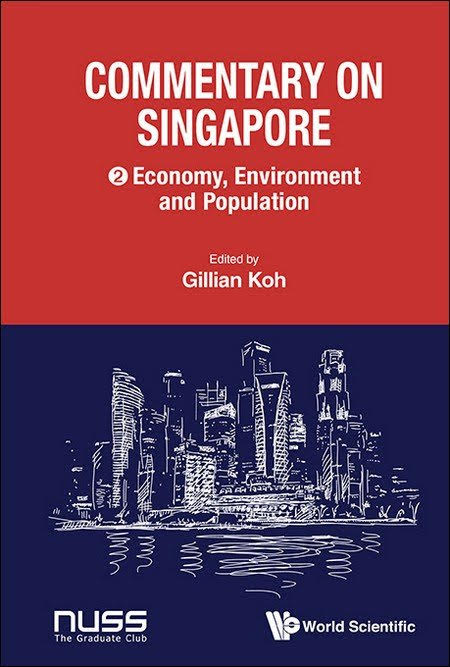
Commentary on Singapore Volume 2: Economy, Environment and Population
Commentary on Singapore Volume 3: Culture, Identity and Society
Commentary on Singapore: Foreign Policy, Governance and Leadership Vol 1
Completely Revised and Expanded Everybody Writes
Connect : Resolve conflict, improve communication, strengthen relationships

